Introduction to Supply Chain Management
A reading from HBA1 Operations Course.
What is a Supply Chain?
So we can reason this one out, a supply chain comprises all the parties involved in providing a product or service. An example supply chain for digital cameras is:
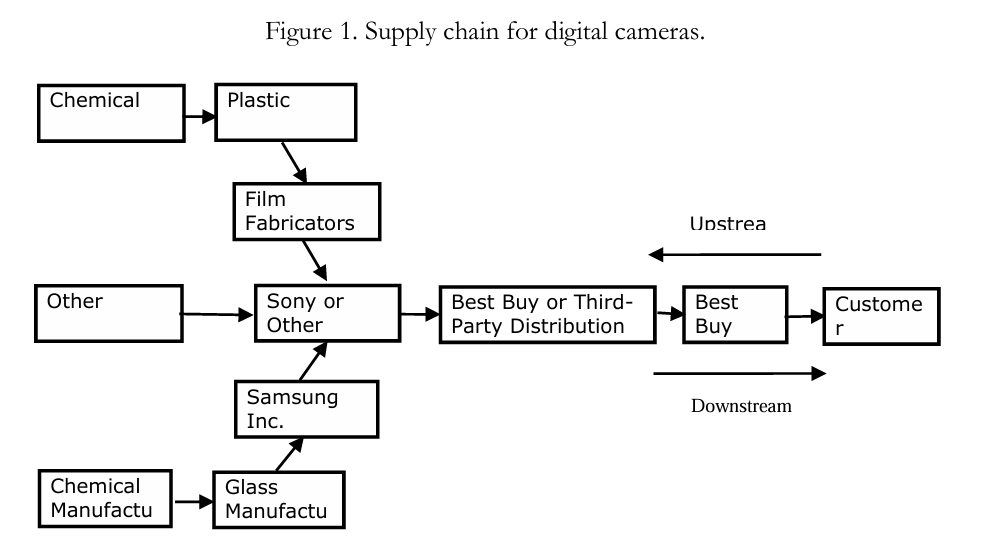
But supply chains don’t just need to be able materials downstream. This brings us to…
Flow
Many things can flow through a supply chain. The below table demonstrates:
| Upstream | Downstream | |
|---|---|---|
| Material | Returns, repairs, servicing, recycling, disposal | Raw materials, intermediate products, finished goods |
| Information | Sales, orders, inventory, quality, promotion plans | Capacity, promotion plans, delivery schedules |
| Finance | Payments, consignments | Credits, consignment, payment terms, invoive |
An example using the above cameras supply chain is the realization that the key to supplying Best Buy customers with a steady stream of cameras is the information flow. Information about part orders and sales must be shared with upstream parties, and capacity and delivery schedule information must be shared with the downstream parties.
Supply Chain Strategies
Categorizing Based on Uncertainty
Demand-side Uncertainty
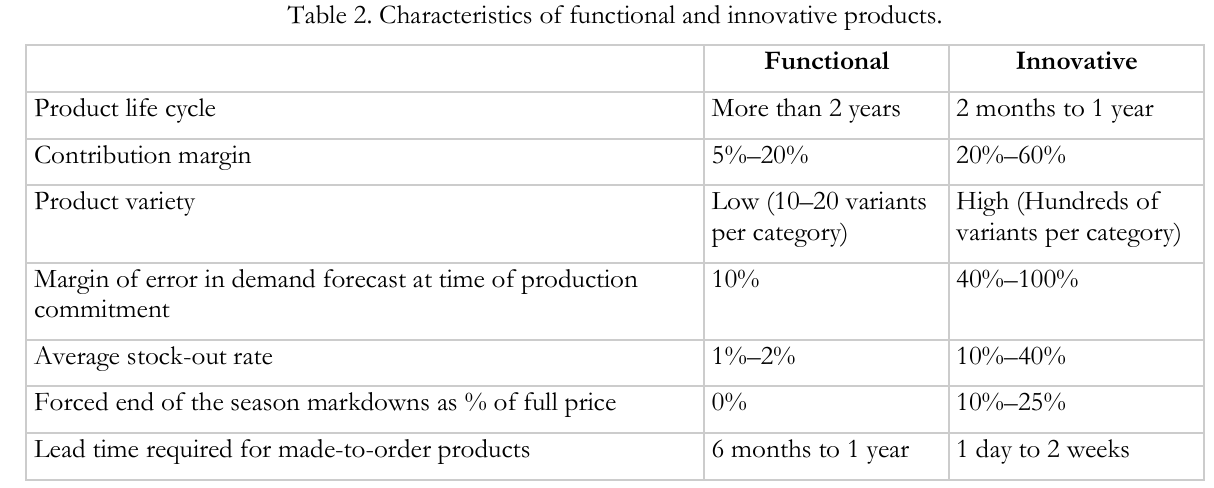
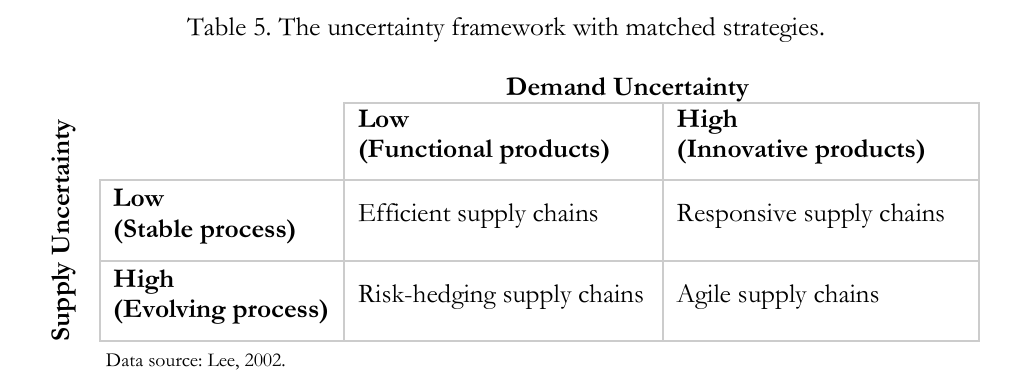
We classify products as either functional or innovative. This makes sense, functional products (like groceries, oil, basic clothing) long life cycles and so stable demand, people need them and they work. But innovative products (fashion apparel, computers), have short life cycles, so demand is unpredictable.
Supply-side Uncertainty
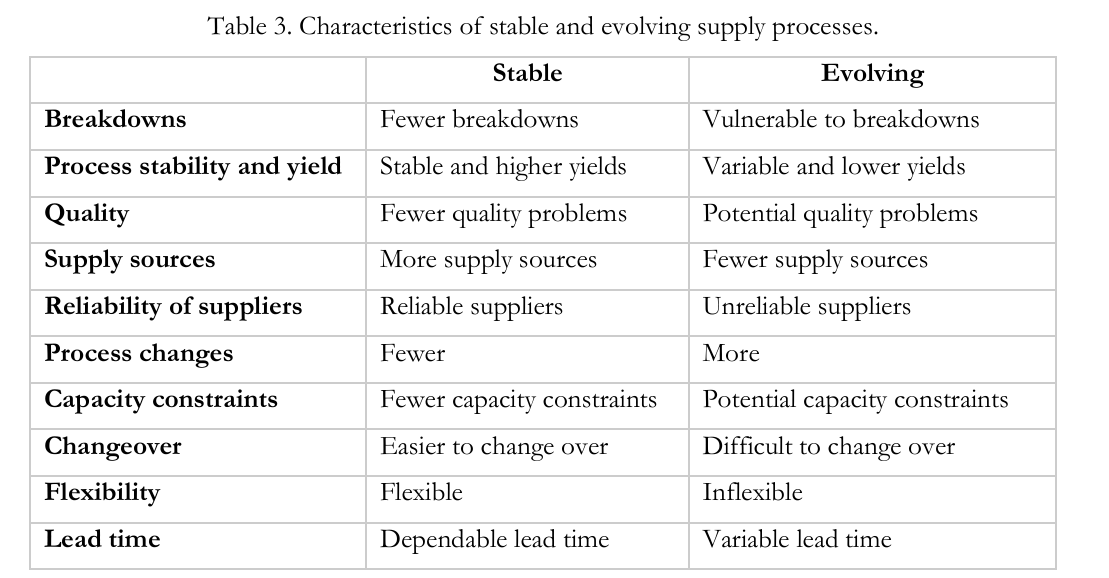
Supply processes may be classified as either stable or evolving. When the manufacturing process is mature, the supply base is well established, the process is stable. If, the process and underlying technology are still under development, the supply base is likely limited in size and experience, so we call it evolving.
Putting it Together
So now we get to look at the different kinds of supply chain strategies that emerge from these two decisions.
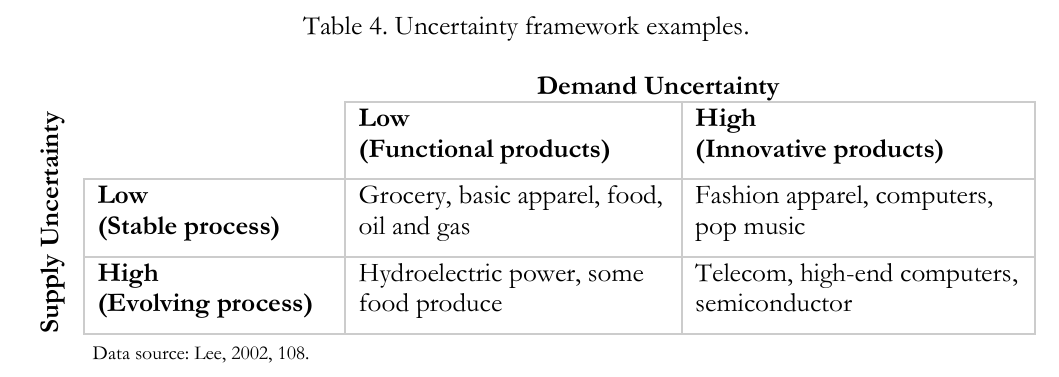
Thus, we have four types of strategies that correspond to those four product types:
- Efficient
- Risk-hedging
- Responsive
- Agile
Supply Chain Strategies
Efficient Supply Chains
Goal: Minimize cost, maximize efficiency
Key characteristics:
- Lean operations, high capacity utilization
- Streamlined logistics and distribution
- Heavy use of forecasting and planning
- Focus on eliminating non-value-added activities
Examples: Groceries, basic apparel, commodities
Risk Hedging Supply Chains
Goal: Reduce supply risk
Key characteristics:
- Resource pooling (e.g., shared inventory)
- Multiple sourcing / backup suppliers
- Information sharing across firms
- Use of marketplaces or networks to secure supply
Examples: Products with stable demand but uncertain supply (e.g., agriculture, energy)
Responsive Supply Chains
Goal: Respond quickly to demand changes
Key characteristics:
- Flexibility over efficiency
- Postponement (delay final production decisions)
- Build-to-order / short lead times
- Rapid replenishment and small batch production
Examples: Fashion, consumer electronics
Agile Supply Chains
Goal: Be both flexible and risk-resilient
Key characteristics:
- Combines responsiveness + risk hedging
- Inventory pooling + flexible capacity
- Strong coordination across supply chain partners
- Real-time information sharing
Examples: High-tech industries (e.g., semiconductors)